How to Search Trail Running Socks on cssbuy
How to Search Trail Running Socks on cssbuy
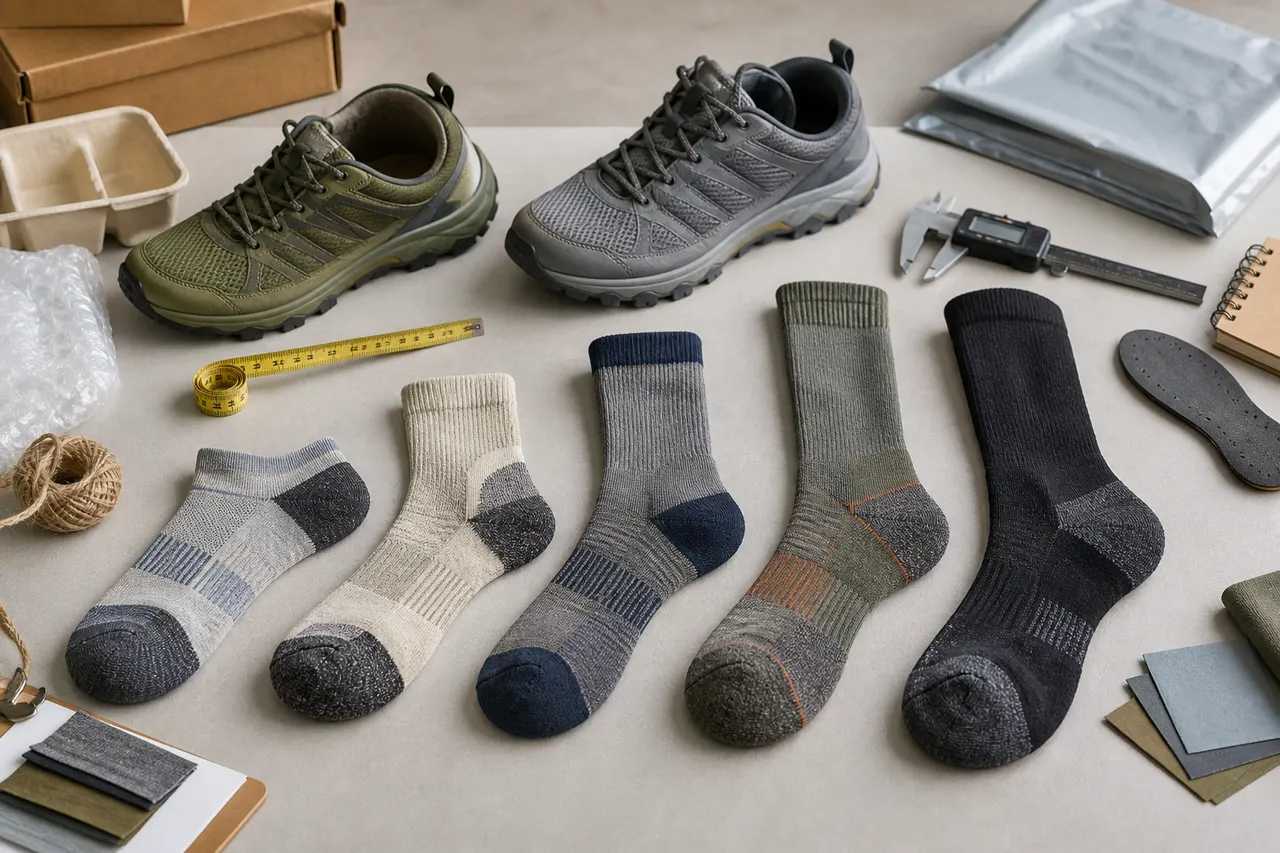
When looking for trail running socks on css-buy.org, the key is not to first search for styles that "look professional," but to clearly define your own usage scenario: whether there is enough space inside your shoe, how far you run, where you are prone to chafing, and whether you need protection from sand and debris entering the shoe opening. The wrong choice of trail running socks is usually not about color, but about thickness, sock height, anti-chafing zones, and size labeling that do not match your actual running shoes.
This article is suitable for people who are ready to use cssbuy as a purchasing agent for socks from Chinese e-commerce platforms and want to build a candidate list before placing an order. It is not suitable for determining the authenticity of a brand, nor is it a substitute for professional foot care, sports injury, or medical advice. This article does not guarantee that any links, prices, stock, or sizes will remain valid after publication; product pages, images, and logistics conditions need to be re-verified before ordering. Verification date: 2026-09-06.
First confirm your shoe space, distance, and chafing areas
Before searching, look at your own running shoes, not the product titles first. The internal space of trail running shoes, tongue thickness, heel lock, and toe room directly determine the thickness and structure of the socks.
If your shoes are tight, prioritize thin or medium-thin trail running socks to avoid your toes hitting the shoe front when socks are too thick. People with ample shoe space can consider medium-thick socks, especially on long distances, gravel roads, or routes with many downhills, where extra cushioning may be more meaningful.
It is recommended to first record these 4 pieces of information:
Shoe space: tight, normal, loose
Main distance: 5–10 km, half marathon distance, long trail, hiking mix
Chafing areas: toes, forefoot, arch, heel, ankle
Terrain: dirt trails, gravel, wet, grass, sandy, many ups and downs
For example, if you wear low-cut trail running shoes and your ankles are often rubbed by grass, gravel, or the shoe collar, short socks are not the most stable choice. Conversely, if you only run lightly on park dirt trails, thick compression socks may make your feet hot. 🏃
The role and limitations of cssbuy Spreadsheet in sock screening
cssbuy Spreadsheet is more suitable for managing candidate links than directly judging which socks are definitely suitable for you. Its value lies in putting socks found from different stores and keywords into the same table for easy comparison of titles, images, sizes, material labels, quantity combinations, and notes.
You can record each candidate sock using the same set of fields:
Field | Purpose of recording |
|---|---|
Product title keywords | Check if it really contains clues like trail running, running, anti-chafe, anti-slip |
Sock height | Distinguish between no-show, ankle, crew, knee-high, and compression socks |
Thickness description | Determine if it suits your current shoe space and season |
Anti-chafe areas | Record image evidence of heel, toe, arch, ankle |
Size range | Compare with foot length, shoe size, and page size chart |
Material label | Record if it states cotton, nylon, polyester, spandex, wool, etc. |
Quantity combination | Single pair, 3-pack, multi-pack, to calculate cost per pair |
Link status | Re-confirm before ordering that it's accessible, not delisted, and options are selectable |
The boundaries are also clear: Spreadsheet cannot verify actual product quality for you, nor guarantee that seller images match warehouse photos. If you have doubts, wait until the goods arrive at the warehouse and check QC photos before deciding whether to continue shipping, return, exchange, or switch styles.
Search in layers using keywords like trail running, running socks, anti-slip, and compression
Don't search with just one term. Chinese product titles often mix functional words, scenario words, and marketing words, and a single search can easily miss suitable candidates or mix in ordinary sports socks.
You can search in three layers:
The first layer is scenario words, which help find trail running direction:
Trail running socks
Outdoor running socks
Mountain running socks
Hill running socks
Hiking running socks
The second layer is functional words, which help filter for anti-chafe and stability:
Anti-chafe running socks
Anti-slip sports socks
Arch support socks
Terry cushion running socks
Cushioned running socks
The third layer is structural words, which help match your foot shape and shoe space:
Toe socks for running
Crew running socks
Low-cut running socks
Compression running socks
Thin quick-dry socks
It is recommended to keep only a small number of candidates for each set of keywords, and do not add every sock that has the word "sports" in the title. A more stable approach is: keep 3–5 of the most relevant links for each keyword, then go back to Spreadsheet for unified comparison. This avoids being unable to decide when faced with dozens of similar products later.
Narrow down candidates by sock height, thickness, arch wrap, and toe structure
Trail running sock screening can follow the order of "first exclude obviously unsuitable ones, then compare details."
Sock height first determines whether it protects the ankle and shoe collar. No-show or low-cut socks are suitable for clean shoe collars, flat routes, and shorter distances; crew socks are more suitable for most trail running scenarios because they reduce direct friction between the shoe collar and skin; knee-high or compression socks are suitable for those who need calf compression, grassy sections, or long distances, but they are also more likely to cause heat.
Thickness should be considered together with shoe space. Thick socks are not necessarily more professional, and thin socks are not necessarily worse. If your shoes are tight, thick socks may cause toes to hit the shoe front and increase the risk of black toenails on downhills; if your shoes are loose, socks that are too thin may cause your feet to slide inside the shoes, increasing the chance of blisters.
Arch wrap looks at whether the middle section of the sock has a clear elastic tightening area. In images, you may see arch wrapping lines, elastic bands, or changes in local weave. This structure does not guarantee suitability for everyone, but at least it shows that it is not a completely flat ordinary sock.
Toe structure mainly has two types: regular round toe and toe socks. Toe socks may reduce friction between toes, but they are slower to put on and take off and rely more on accurate sizing; regular round toe socks are easier to fit most people, but those prone to toe seam irritation should pay special attention to the forefoot and toe seams. 🧦
What anti-chafe evidence to check in product images and QC photos
Product images first show structure, QC photos show actual items. Their roles are different; don't mix them up when judging.
Product images need to focus on these evidences:
Whether the heel has thickened or three-dimensional wrapping area
Whether the toe front has flat seams or thickening description
Whether the forefoot has terry cushion, cushioning weave, or anti-slip texture
Whether the arch has a tightening wrapping structure
Whether the sock cuff has ribbing and looks unlikely to slip
Whether the sock height can cover the shoe collar
QC photos after arrival should focus on actual consistency: color, quantity, size label, packaging label, left-right structure, thickness appearance, and whether there is obvious snagging, stains, holes, or wrong item sent. QC photos cannot prove long-term durability or actual feel, but they can help you rule out obvious wrong goods and basic quality issues.
If the seller's image looks professional, but the QC photo shows just ordinary thin sports socks without arch wrap, heel structure, clear size or material labels, don't continue just because the title says "trail running."
Record size, material label, quantity combination, and link status
Sock size is easy to overlook, but it directly affects toe space and heel position. Before ordering, at least record the size range stated on the page, such as 35–38, 39–42, 43–46, or S/M/L. Don't just assume "one size fits all," especially for long-distance running: too small will be tight, too big will bunch up in the shoe.
Material labels should also be recorded as original text. Common labels include cotton, polyester, nylon, spandex, wool, Coolmax or other quick-dry fibers. If the page only says "highly elastic and comfortable" or "professional sports" without any material information, mark it as insufficient information in the candidate table.
Quantity combinations affect real cost. A 3-pack or 5-pack may seem cheaper per pair, but if the size is inaccurate or thickness unsuitable, the cost of trial and error is magnified. For first-time purchases, it's better to verify with a small quantity, and after confirming fit, reorder the same style.
Link status needs to be rechecked before ordering. Sock products may have sold-out sizes, unavailable colors, changed bundles, modified titles, or dead links. Don't judge current availability based on screenshots saved days ago. 📌
Checkpoints to avoid mistaking ordinary sports socks for trail running socks
Many ordinary sports socks use words like "running," "outdoor," "anti-slip," but their structure may not be suitable for trail running. When judging, put the title last and look at evidence first.
Common problems with ordinary sports socks include:
Only color images, no detail images of sole, heel, and cuff
No size range, only "one size"
No material ratio or material category
Sock height too low to protect shoe collar friction area
No thickening or structural description for forefoot and heel
Title is full of generic words like basketball, fitness, running, outdoor, but images do not support specific use
If you only do daily jogging or gym wear, ordinary sports socks may be enough. But trail running is more likely to encounter downhill impact, slippery surfaces, sand entry, prolonged foot sweat, and in-shoe friction, so socks need to match the route and shoes more specifically.
A practical judgment: if you remove the title and can still point out why it is suitable for trail running based on images and specs alone, it deserves to be a final candidate. ✅
Complete the final screening checklist for candidate socks before ordering
Before ordering, narrow candidates to 1–3, and don't buy too many similar styles at once. Final screening can be done in the following order:
Does sock thickness match shoe space?
Does sock height cover your chafing areas?
Is there visible anti-chafe design on heel, toe, or forefoot?
Is there image or spec evidence of arch wrap?
Does the size range match your foot length and shoe size?
Is the material information sufficient to judge breathability, elasticity, and season suitability?
Is the quantity combination suitable for first trial?
Is the link still accessible and are options selectable?
After arrival, do QC photos match key structures on the product page?
The final choice is not necessarily the most expensive or the one with the most professional title, but the one that best matches your current shoes, route, and chafing areas. For those trying cssbuy for trail running socks the first time, a more stable strategy is to buy a small quantity, check QC photos after arrival, confirm no obvious structural issues, and then decide whether to consolidate and ship.
The conclusion is simple: trail running sock selection should revolve around shoe space, anti-chafe areas, and sock height. What you may save is the cost of repeatedly buying wrong socks; the increased risk is that product images differ from actual items, size labels are unclear, or socks don't suit your shoes. It is not recommended for people with material sensitivities, need for precise compression levels, or must rely on professional sports medicine advice to order solely based on ordinary product pages. 🧭
Browse our latest products and find your next favorite item.