CSSBuy Coupon Budget for Trail Running Gear
CSSBuy Coupon Budget for Trail Running Gear
The most common mistake in budgeting for trail running gear is being attracted by discount thresholds before considering what you actually need. A more reliable sequence is to first determine the gear that must be replenished for this round, record the verifiable price and risk of each item, and finally judge whether the discount truly reduces the total landed cost.
This article helps users who plan to purchase shorts, socks, waist packs, or hydration gear through the css-buy.org related purchasing process to establish an executable budget. After completion, you should be able to decide between bundling to reach thresholds, cutting items, and delaying purchases. This article is not suitable for selecting trail running shoes, headlamps, first aid gear, or other products that highly depend on professional fitting or safety certification, and it does not provide any unverified coupon codes, shipping costs, inventory status, or platform policies.
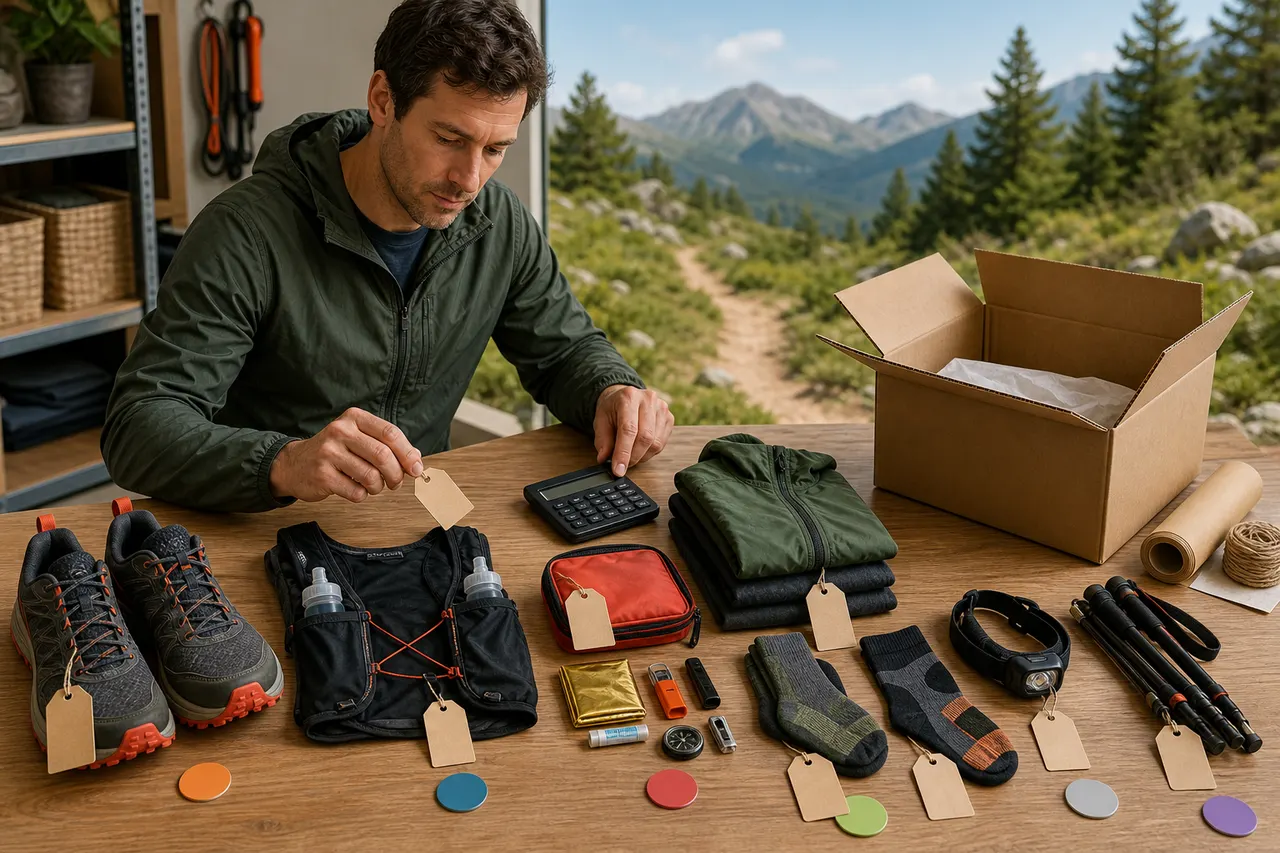
A schematic diagram of the allocation approach for a trail running gear coupon budget.
First List the Essentials and Optional Items in Trail Running Gear
Start from your specific routes and existing gear, not from a product list. A short-distance training session with sufficient aid stations differs from a long-distance, hot-weather, or mandatory-gear-heavy race in terms of hydration capacity and carrying space requirements.
You can divide purchasing needs into three tiers:
Must replenish: Gear whose absence will affect this training or race plan, such as lacking suitable athletic socks, or your current waist pack cannot stably carry essential items.
Conditional needs: Gear needed only under specific distances, weather, or aid conditions, such as larger soft flasks or extra storage space.
Optional upgrades: Items that mainly improve color coordination, weight reduction, or storage convenience, but your existing gear can still complete the task.
Reserve budget for must-replenish items first, then consider conditional needs. Optional upgrades should not automatically enter the shopping list just to meet a discount threshold. When budget is tight, prioritize functions directly related to hydration, chafing prevention, and stable carrying, rather than duplicate styles in the same category. 🏃
What the cssbuy Spreadsheet and Coupon Information Can Confirm
The so-called cssbuy Spreadsheet typically only serves as a discovery entry for candidate products. The product names, categories, images, prices, or remarks in the sheet may help you narrow your search, but cannot alone prove that the product is still in stock, the current price is valid, the sizing is accurate, the material matches the description, or the seller can fulfill normally.
For each candidate product in the sheet, you should return to the currently accessible product page and re-verify:
Whether the product name matches the actual category.
Whether the page displays normally, rather than redirecting, showing a blank page, or being invalid.
Whether the available sizes, colors, and specifications still exist.
Whether the listed price corresponds to a single item, a bundle, or a specific variation.
Whether the product description provides sufficient information such as dimensions, material, or capacity to support decision-making.
Whether there are domestic fees or other displayed fees that need to be accounted for separately.
Coupon information can only be judged based on the conditions shown on the current page. The writing date of this article is August 30, 2026, but we have not obtained independently verifiable specific discount amounts, thresholds, applicable categories, or validity periods, so we do not treat any coupon as currently valid. Before actually placing an order, you should reconfirm on the platform's checkout page and record the verification date in your budget sheet. 🔎
Allocate Budget by Shorts, Socks, Waist Packs, and Hydration Gear
Do not allocate equal amounts to each category from the start. A more practical approach is to first set a total budget cap that includes product costs, domestic fees, and international shipping reserve, then allocate based on the importance of the gaps.
Category | Priority Evidence to Verify | Common Budget Risks | Suggested Handling |
|---|---|---|---|
Shorts | Size chart, waist measurement method, liner description, pocket structure | Incorrect size, discrepancy between described and measured dimensions | Do not buy at a low price without a usable size reference |
Socks | Size range, number of pairs, thickness or material description | Mistaking bundle price for per-pair price | Calculate per-pair cost first, then decide if multiple pairs are needed |
Waist packs | Dimensions, securing method, pocket openings, and capacity for items | Looks cheap but cannot stably hold essentials | Check against the phone, keys, and supplies you plan to carry |
Hydration gear | Nominal capacity, interface type, dimensions, and included accessories | Unsuitable capacity, incompatible accessories, or hygiene-related return restrictions | Delay purchase if compatibility cannot be confirmed |
A reliable budgeting sequence is: first lock in the product cost of must-replenish items, then add visible domestic fees, then keep an international shipping buffer, and finally use the remaining amount for conditional needs. Do not let optional upgrades consume the shipping reserve.
Hydration gear directly relates to usage conditions. If the page lacks clear capacity, size, or interface information, suitability cannot be confirmed from images alone. For products involving drinking contact, carefully assess material descriptions, cleaning conditions, and after-sales restrictions; when verification is impossible, choosing a source with clearer specifications is usually safer.
Record Discount Thresholds, Applicable Scope, and Validity Status in the List
A discount cannot be recorded as just an amount. At least record the following fields simultaneously:
Discount name or identifier.
Verification date.
Whether the threshold is based on product amount, order amount, or another metric.
Whether it is limited to new users, specific categories, sellers, warehouse operations, or shipping routes.
Whether domestic fees, international shipping, or additional services are excluded.
Whether it can be combined with other discounts.
Displayed validity period and current status.
Actual discount amount shown at checkout.
Only when the checkout page shows the reduction can the discount be included in the final budget. Discounts that have not met usage conditions, have unconfirmed applicability, or only have expired screenshots should be marked as "pending verification" and their value treated as zero for now.
You can use the following calculation relationship:
Estimated total cost after discount = product amount + displayed domestic fees + estimated international shipping cost + visible service or payment fees + potential taxes at destination − discount confirmed at checkout
Among these, items for which reliable values cannot be obtained should be kept as "unconfirmed" separately, not simply filled with zero. This yields not a false precise price, but a decision list that exposes cost gaps. 🧾
Compare Three Options: Bundling to Reach Threshold, Cutting Items, and Delaying Purchase
Whether bundling is worthwhile depends on comparing the total added cost with the actual discount, not just looking at "how much more is needed to reach the threshold." If you add a non-essential item to get the discount, you may also increase domestic fees, packaging weight, volume, and after-sales complexity.
You can create three scenarios separately:
Bundling scenario: Add consumables that you will actually use in the near future, and recalculate changes in product cost, domestic fees, and shipping.
Cutting scenario: Remove optional upgrades, accept not being able to use the discount, and complete the core purchase with lower cash outlay.
Delaying scenario: Keep the current list but do not order immediately, wait for missing information to be confirmed, or combine with the next real need for evaluation.
To judge whether bundling saves money, use:
Net change from bundling = added products and associated fees − actual additional discount
If the result is greater than zero, total spending increases; even if you get the discount, it cannot be called a saving. If the result is less than zero, also confirm that the added products are truly needed and assess the higher package value, weight, and single-loss risk.
The cutting scenario suits users with a clear budget cap and many optional items. Delaying purchase suits situations where sizing, inventory, discount status, or shipping costs are still unclear. An expiring discount does not replace insufficient evidence.
Clarify the Boundaries of Product Costs, Domestic Fees, and International Shipping Costs
The price on the product page is usually not equal to the final landed cost. In your budget, separate costs into different stages to avoid mistaking international shipping costs that have not yet appeared as already included in the product price.
At the product stage, record the product amount, displayed domestic fees, and visible service fees. At the warehouse stage, international shipping costs may need to be re-estimated based on actual weight, dimensions, packaging options, and available routes after the items are stored. At the destination stage, taxes, carrier fees, or customs documentation requirements may also arise, depending on the destination country, declared contents, product category, and local regulations.
Before obtaining actual packaging data, international shipping can only be an estimated range, not a fixed commitment. Combining packages may reduce repeated fixed fees but may also increase volumetric weight, package value, and single-loss risk; splitting packages may increase fixed costs but may meet route restrictions or reduce concentrated risk in a single package. Compare using actual stored data rather than applying a unified conclusion.
Customs declarations should truthfully state product names, quantities, and values, and comply with destination import restrictions. Insufficient budget is not a reason for under-declaring, misclassifying, or evading inspection. 🌍
Before Ordering, Check Sizing, QC Evidence, and Return/Exchange Risks
Sizing for shorts and socks cannot be chosen solely based on daily habits. First measure your own data, then check the measurement standards on the product page. Centimeters vs. inches, flat width vs. circumference, stretch range vs. fixed dimensions can all cause misjudgment. If the page lacks a clear size chart, factor return/exchange risk into your decision, and if necessary, abandon that candidate.
After items are stored, QC information should focus on visible and assessable issues:
Whether the tagged size, color, and quantity match the order.
Whether key dimensions of shorts can be confirmed through photos with a measuring tape.
Whether the waist pack's zippers, buckles, stitching, and pocket structure have obvious abnormalities.
Whether the hydration gear's capacity or model marking matches the order and whether accessories are complete.
Whether the product has obvious stains, damage, or wrong style.
Photos can only support visible facts. They cannot prove long-term fabric durability, that the waist pack will not bounce while running, or that the hydration container is absolutely leak-proof. Performance that requires touch, prolonged use, or actual loading to judge should not be inferred from ordinary QC images.
Also confirm the time window for requesting resolution, evidence requirements, and related fees. The platform's and seller's current return/exchange conditions are highly volatile information and should be verified separately when submitting the order and when handling exceptions. After discovering an error, save the order page, QC images, and communication records, but do not publicly share order numbers, addresses, phone numbers, payment information, or complete shipping labels.
Final Action Checklist for Completing a Trail Running Gear Budget
Before submitting the order, perform final checks in the following order:
Write down the route or training needs for this round, and distinguish between essentials, conditional needs, and optional upgrades.
Confirm that each candidate product page is currently accessible and that the name and specifications match the planned category.
For shorts and socks, record size references; for waist packs, record the items you plan to carry; for hydration gear, record capacity and compatibility requirements.
Separately record product amount, domestic fees, international shipping reserve, visible additional fees, and potential taxes.
Treat unverified discounts as zero and only subtract them after confirmation at checkout.
Calculate bundling, cutting, and delaying scenarios separately, and choose the one with acceptable total cost and risk.
After items are stored, check quantity, size labels, key dimensions, structure, and obvious defects, and decide within the resolution window whether to proceed with shipping.
Recalculate shipping options using actual weight, dimensions, and available routes, and prepare truthful declaration information.
True savings amount is the verifiable cost difference between the list of items you genuinely needed and the final plan, not the maximum discount shown on the coupon page. Bundling may increase weight, package value, sizing errors, and after-sales risk, so it is more suitable for users whose added items were already in their near-term purchasing plan.
If your core gear is already complete, candidate products lack size or specification evidence, international shipping costs still exceed budget, or you would have to buy items with no actual use to reach the threshold, bundling is not recommended. In such cases, cutting or delaying purchases is often more controllable than chasing an unconfirmed discount.
Agent Platform Shopping FAQ
1. What product categories are included in the css-buy.org spreadsheet?
In the css-buy.org spreadsheet, you can find shoes, clothing, bags, accessories, sweatshirts, fragrances, hats, scarves, belts, and various household daily necessities.
Browse our latest products and find your next favorite item.