CSSBuy Trail Running Shorts Spreadsheet Guide
CSSBuy Trail Running Shorts Spreadsheet Guide
Trail running shorts shouldn't be filtered just by color or page recommendations. What really affects your experience is expected mileage, weather, what you carry at your waist, liner structure, pocket stability, and size allowance. This guide helps you use the css-buy.org Spreadsheet to build a shortlist, then go back to product source pages, size information, order pages, and warehouse QC photos to verify each item.
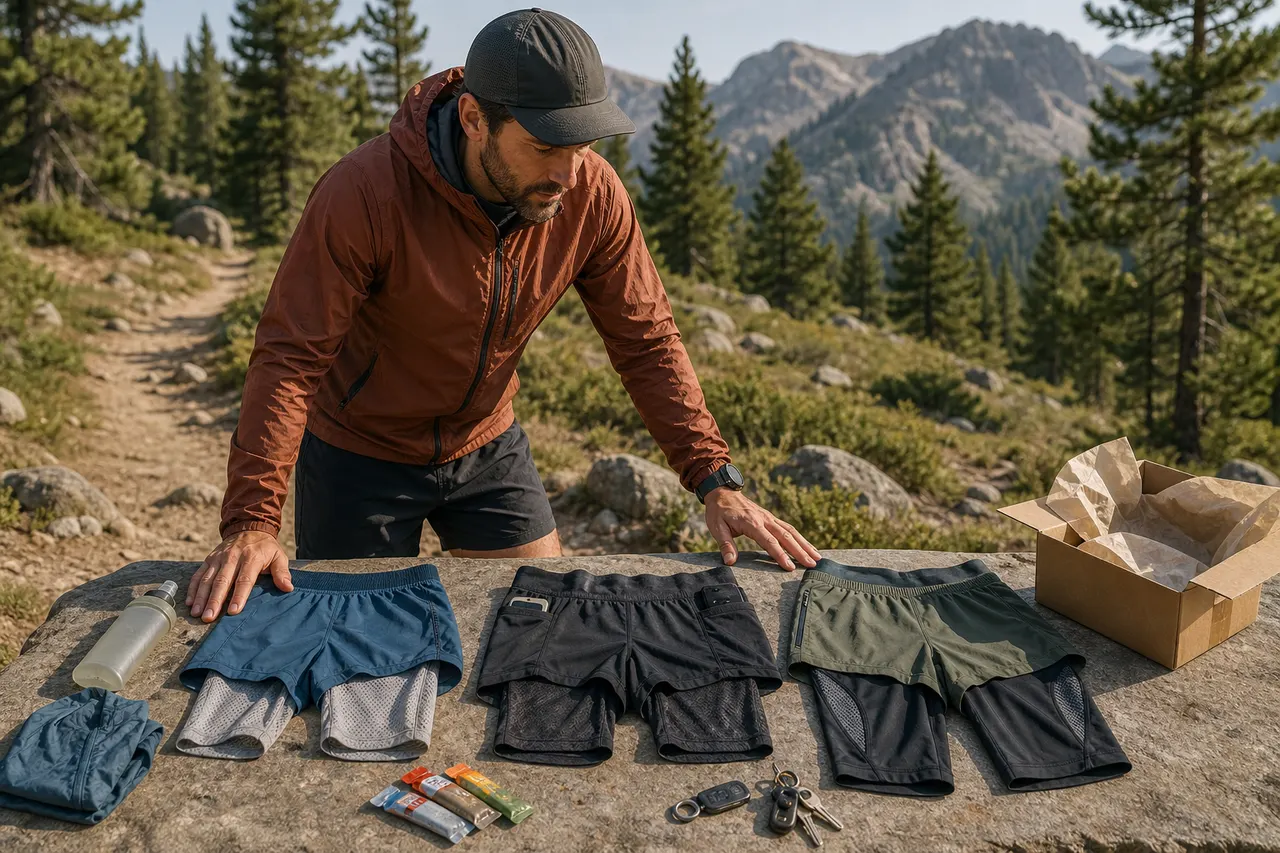
This article is for buyers who are ready to purchase trail running shorts through CSSBuy and are willing to verify product details themselves. After reading, you should be able to eliminate candidates that don't meet your mileage and carrying needs, and put together a checklist for ordering and warehouse inspection.
This article is not for people who need professional compression gear, integrated mandatory race gear carrying systems, or must rely on actual try-on to determine fit. The Spreadsheet is an entry point for discovering candidate products, not a guarantee of stock, authenticity, performance, or fit.
Information verification date: August 27, 2026. Prices, stock, seller pages, route restrictions, service fees, international shipping, and return/exchange terms may change, and should be reconfirmed before payment and before submitting international parcels.
First, clarify mileage, weather, and items you carry
Write down your most common running scenario before browsing dozens of shorts in the table. It's recommended to record at least the following information:
Usual running distance and estimated time
High temperature, rain, low temperature, or day-night temperature difference
Whether you carry a phone, keys, energy gels, soft flasks, and a light jacket
Whether you also use a trail running vest or waist pack
Your tolerance for liners, compression, and thigh chafing
Training use or race use
For short distances with a vest, shorts usually only need to hold a phone, keys, or a few supplies. For long distances when you want to reduce gear carried on your back, waist-wrap pockets, item compartmentalization, and anti-bounce ability become more important. 🌲
Weather also changes your filtering order. In hot and humid conditions, you should first check fabric descriptions, liner coverage, and moisture-wicking structure, but you can't judge actual performance solely by marketing words like "quick-dry." In cold or windy conditions, consider inseam length, inner coverage, and whether they can be layered with tights.
What the Spreadsheet can help filter and what it cannot prove
The Spreadsheet on css-buy.org can be used to centrally view candidate products and organize comparison fields. It helps narrow down options, but cannot replace product page verification, size confirmation, warehouse inspection, or actual try-on.
Spreadsheet can be used for initial screening | Still needs separate verification |
|---|---|
Product category, style, and visible inseam length | Current stock, color, and size availability |
Pocket and liner clues shown on the page | Pocket capacity, stability while running, and seam strength |
Marked size and size info provided by the seller | Physical measurements, fit deviation, and movement allowance |
Candidate price and product link | Final product price, service fees, international shipping, and taxes |
Structural differences visible in images | Fabric feel, abrasion resistance, authenticity, and long-term durability |
After opening a candidate entry, confirm that the link is still accessible, the page has a clear product name, and product information sufficient for judgment is visible. Redirects, blank pages, pure tag pages, or entries with insufficient info should not enter the final list.
Prices and titles in the table are only verification clues. Before payment, the information displayed on the actual order page should be taken as final, and save the product options, size chart, and seller descriptions at that time for easy tracing if discrepancies arise.
Build a candidate list by inseam, liner, and waistband structure
It's recommended to keep three to five options first, rather than submitting many similar products at once. For each, record the inseam, liner, waistband, and adjustment method, and mark "unclear from images" as a separate item to confirm, not to fill in yourself.
Inseam affects coverage and freedom of leg lift. Shorter styles are usually lighter, but whether they ride up or cause chafing still depends on the cut and your body shape. Longer styles cover more but may feel clingy on legs when wet.
Liners can be recorded as follows:
No liner: suitable for those who already have a fixed base layer plan, but the weight and friction of the base layer should be included in overall judgment.
Brief liner: relatively simple structure, should check binding, seams, and coverage position.
Boxer or compression liner: may provide more coverage, need to check inseam length, seam position, and stretch allowance.
Unable to confirm: save a screenshot of the product image, and confirm with the seller or platform customer service before purchasing.
The waistband not only determines fit but also provides stability when storing items. Check for drawstrings, elastic width, pocket opening positions, and whether items may press on the abdomen when loaded. When anti-bounce ability cannot be confirmed from static images, write it as unknown, not evaluate it as stable.
Check pocket layout based on phone, soft flask, and supply needs
More pockets doesn't mean better for trail running. The key is whether items can be separated, stay close to the body, and avoid bouncing on continuous downhills. 📱
Check one by one according to the actual sizes of items you plan to carry:
Phone: record the length, width, and thickness with a protective case, and confirm whether the pocket opening and interior space have enough allowance.
Soft flask: confirm whether the page clearly shows compatible capacity and securing structure; without size evidence, do not assume it can fit.
Energy gels: check whether multiple supplies will crowd out the phone space after insertion.
Keys: prioritize independent small pockets, zippered pockets, or attachment loops to reduce the risk of scratching the phone.
Trash: reserve a space separate from unopened supplies.
If you plan to carry a full soft flask, also consider liquid sloshing, waistband sagging, and pocket stress. Usually, flat-lay product images cannot determine these performance aspects. For race use, flask pockets without clear size or structure evidence should be considered unverified functionality.
Use the size chart to check waist, hip, and movement allowance
Don't just match the letter size you normally wear to the product options. Different sellers may use different measurement methods, and the same letter size may correspond to different centimeters.
First measure your natural waist and widest hip circumference, and record the flat-lay waist width, hip space, and inseam length of your commonly used running shorts. Then confirm whether the product size chart uses body measurements or garment flat-lay measurements; if the page doesn't specify, the two cannot be directly compared.
It is recommended to check in the following order:
Convert your own body measurements to centimeters.
Determine whether the size chart is single-side flat width or full circumference.
Check whether the fabric has explicit stretch labeling, but don't replace size allowance with stretch descriptions.
Reserve movement space for leg lift, climbing, and squatting.
If between two sizes, decide based on waistband adjustment range, liner structure, and personal compression preference.
If unable to confirm, ask specific size questions before payment, not just "does the size run true?"
A more effective question is: "What are the actual waist measurements of the selected size in centimeters when laid flat and when stretched?" This is easier to verify than relying on generic size recommendations. 📏
Details to check when viewing product images and QC photos
Product images are used to understand design intent, and warehouse QC photos are used to check the appearance of the specific item you received. Neither can prove running performance, fabric feel, or long-term durability.
When viewing product images, focus on recording:
Are the front, back, and both sides of the waistband clearly shown?
Are pocket openings, depths, and closure methods identifiable?
Liner coverage and where it connects to the outer layer
Structure of the crotch, inner leg, and side seams
Whether the drawstring is internal or external
Are the size chart, material description, and care information complete
After receiving QC photos, check color, size tag, front and back, pattern placement, obvious stains, damage, skipped stitches, and left-right asymmetry. If key positions are not shown, you can request additional photos or measurement services within the time window allowed by the order, and first confirm any possible fees.
QC photos only show information visible from the camera angle. They usually cannot confirm whether the pocket fits your phone, whether the liner chafes, whether the fabric truly dries quickly, and they are not a substitute for authenticity verification. When obvious discrepancies are found, don't rush to submit for international shipping; first check the available processing options and deadlines for the order. 🔍
Compare weight, packaging, fees, and return/exchange information boundaries
Order cost is not equal to final cost in hand. After the item reaches the warehouse, international shipping is generally affected by package weight, packaging dimensions, selected route, service items, and destination country rules.
If the page or Spreadsheet does not have reliable weight, mark weight as unknown. After warehouse weighing data appears, compare available routes and estimated fees. Don't fill in a weight without evidence just to get a lower quote.
Consolidating packages may reduce duplicate packaging or fixed fees, but may also increase volumetric weight, total package value, and single-shipment loss risk. Splitting packages may increase fixed fees but may resolve some route restrictions. Calculate based on actual warehouse weight, package dimensions, and route quotes, and don't assume one method is always cheaper.
Return/exchange boundaries should also be confirmed before purchase. Focus on whether the seller accepts returns/exchanges, when the deadline starts, whether the warehouse has already exceeded the application window, and who bears domestic return shipping and additional service fees. Once the item is shipped overseas, processing costs and available options usually change.
When clearing customs, declare truthfully and prepare documents and bear possible taxes according to destination country requirements. This article does not provide methods for under-declaring, splitting orders to avoid taxes, or evading inspections. Relevant tax rates, duty-free thresholds, and import restrictions are highly volatile information, and should be based on the destination country customs and carrier route requirements on the shipping date.
Pre-order trail running shorts review checklist
Before submitting your order, complete the following review:
Main mileage, weather, and carried items are clearly defined
Product source page is still accessible, name and options clear
Color, size, liner, and inseam match the candidate record
Phone and supply dimensions correspond to visible pocket information
Unprovable anti-bounce, quick-dry, abrasion resistance, and capacity performance have been marked as unknown
Body measurements and garment flat-lay measurements are distinguished
Product options, size chart, and important seller descriptions have been saved
Processing boundaries before order, after warehouse arrival, and after international shipping are understood
After warehouse arrival, QC photos will be checked, and shipping will be paused if anomalies occur
Shipping plan will be recalculated based on actual weight, dimensions, and destination country
Will declare truthfully and verify local taxes and import restrictions before shipping
The direct savings from this method come from early elimination of candidates with unknown sizes, mismatched pockets, or unsuitable structure, while reducing ineffective photography, domestic returns, and after-sales costs after international shipping. Specific savings must be calculated based on product price, service fees, return costs, and actual shipping fees, and cannot be guaranteed in advance. ✅
It adds the cost of verification time, and when necessary, additional photos, measurements, or domestic return fees. It is suitable for trail runners who value carrying layout, size evidence, and risk boundaries; it is not recommended as professional gear testing, authenticity verification, or mandatory race gear certification. If a product lacks key dimensions, structural drawings, and valid return/exchange information, even if the price looks cheap, you should postpone the order.
agent platform shopping FAQ
1. What are css-buy.org QC photos?
Every drop-shipping platform, including css-buy.org, employs a dedicated quality control unit. After your items reach the css-buy.org warehouse, a quality check is performed and QC images of your products are captured. Typically, three pictures are taken, and the staff confirms that color, dimensions, specifications, and quantity correspond to your order. They also look for any defects. Electronic goods are an exception, as only their external appearance is examined. If a defect is found or the size or color is wrong, the css-buy.org team immediately initiates a return to the seller, helping to ensure you receive good-quality items.
2. What should I do if I am not satisfied with the product received by css-buy.org?
Get in touch with css-buy.org's customer support as soon as you can. For Chinese sellers, most non-specialty goods include a 5-day unconditional return and exchange window. If you are not happy, you may ask for a return. If the package has already left the warehouse and reached you, and you then notice a quality problem, you need to contact css-buy.org's support team so they can mediate with the merchant to arrange compensation.
Customer service email addresses for each platform are listed below:
kakobuy: [email protected]
oopbuy: [email protected]
usfans: [email protected]
hipobuy: [email protected]
superbuy: [email protected]
3. Which platform on css-buy.org offers the best coupons?
I suggest Kakobuy because it currently gives a $15 discount code with no minimum spend. This is a great option for users ordering small packages. The promo code is kakobuy888.
4. Why doesn't css-buy.org consider using Google Sheets?
Google Sheets works only when the spreadsheet has just a few products. Once the product count grows, loading becomes very slow and the system lags heavily. This is especially true on mobile devices, where the display is poor and searching for products is extremely difficult. For the same product list, the spreadsheet on css-buy.org loads faster and provides a better viewing experience.
5. Is the css-buy.org spreadsheet website safe?
This website does not gather any personal data; it only acts as a product catalog for the agent platform. All transactions are completed on the agent platform.
Browse our latest products and find your next favorite item.